
It starts so innocently.
You’re running errands. Your child is being… honestly kind of amazing. You’re thinking, Wow. We might actually make it through Target without a full emotional event.
So you do what any loving parent would do.
You hand them a snack. A little treat. A “yes, you can have it” moment.
And then, 20 minutes later, they are crying because their sock feels “wrong” and the sun is “too bright” and you opened the banana incorrectly.
Welcome to the snack-to-meltdown pipeline.
If you’ve ever wondered whether sugar is actually messing with your child’s mood, energy, and behavior (or if you’re just imagining things because you’re exhausted), you’re not alone. Moms everywhere are noticing the pattern.
Sugar does not automatically equal “bad kid behavior.” But sugar can absolutely contribute to mood swings, energy crashes, and that dramatic spiral into chaos that feels like it came out of nowhere.
Let’s break down what’s really happening, what matters most, and how to handle it without turning into the “no fun allowed” parent.
The Sugar Mood Connection: Why It Feels So Real
First, let’s validate something important.
You are not crazy.
A lot of moms feel like sugar affects their kids emotionally, even if the “sugar makes kids hyper” debate has been argued forever. The truth is: sugar impacts every kid differently, and mood changes are often connected to what sugar is paired with.
Because it’s usually not just sugar.
It’s sugar + no protein.
Sugar + no sleep.
Sugar + too much screen time.
Sugar + being five years old and experiencing the human condition.
In other words, your child isn’t becoming a different person because of a cupcake. It’s more like sugar pours gasoline on whatever is already brewing under the surface.
What Actually Happens in the Body (In Mom Terms)
When kids eat something high in sugar, especially without anything balancing it out, a few things can happen:
Blood sugar spikes fast
That means a quick hit of energy, sometimes excitement, sometimes “suddenly I can run up walls.”
The crash comes after
And the crash is where things get spicy.
Kids can feel tired, moody, emotional, shaky, or suddenly hungry again.
Hunger feels like an emergency
A sugar crash can make kids feel like they need food immediately, not in 20 minutes, and not after you finish checking out.
Their brain interprets that crash as:
“Something is wrong. Fix it. Now.”
And since they do not have adult coping skills, it comes out as whining, crying, snapping at siblings, or being weirdly upset that you blinked too loud.
The “It’s Not Just Sugar” Factor Moms Notice
Sometimes sugar is the obvious culprit, but there are a few hidden factors that make the mood spiral worse:
1) Lack of protein earlier in the day
If breakfast was basically toast and hope, sugar later is going to hit harder.
2) Dehydration
Kids are not great at drinking water unless the cup is neon and it has a character on it. Dehydration can show up as irritability, headaches, and “I’m mad but I don’t know why.”
3) Sleep debt
A tired kid is already living on the edge emotionally. Sugar just adds drama to the plot.
4) Sensory overload
Busy environments like school, parties, restaurants, and stores already put kids in survival mode. Add sugar and they might go full meltdown.
5) Food dyes and ultra processed ingredients
Not every child reacts, but some do. Many moms notice mood changes more often with highly processed sweets than with homemade treats.
Signs Your Kid Is in a Sugar Crash (Not “Being Difficult”)
This is where parenting gets humbling. Because you can’t reason with a blood sugar crash.
Here are common signs the crash is happening:
• Sudden irritability or emotional outbursts
• Crying over small things
• “I’m hungry” even if they just ate
• Complaints that don’t make sense (clothes feel wrong, everything is unfair)
• Restlessness followed by tiredness
• Clinginess or constant need for attention
• Arguments with siblings for sport
If you recognize this, don’t panic. It’s not a moral failing. It’s not your parenting. It’s usually your kid’s body asking for balance.
The Snack-to-Meltdown Pipeline: How It Usually Goes
Let’s be honest. This is the most common sugar meltdown timeline:
1) Treat is consumed happily
2) Energy spikes, mood is great
3) Kid becomes slightly wild, but manageable
4) Time passes
5) Crash hits like a tiny emotional thunderstorm
6) Everyone in the family suddenly has “a tone”
7) You question every decision you’ve ever made
If you’ve ever fed your child a snack in the car and then regretted your entire life 15 minutes later, you are part of a large community.
We meet weekly.
How to Prevent the Crash Without Becoming the Sugar Police
Good news: you do not need to ban sugar to avoid chaos. You just need better timing and better pairing.
The magic trick: Pair sugar with protein or fat
This is what helps stabilize the spike and soften the crash.
Think of it like a snack seatbelt. Sugar is the passenger, but protein keeps it from flying through the windshield.
Examples that actually work:
• Cookie + string cheese
• Fruit snacks + peanut butter crackers
• Cupcake + yogurt
• Hot cocoa + scrambled eggs earlier in the day
• Candy after a meal, not as the meal
You can still let them enjoy treats, you’re just giving their body a little support.
The “Better Snack” Swaps That Don’t Feel Like Punishment
Let’s be real. Kids don’t want your crunchy almond sadness snack. They want the fun stuff.
So instead of removing the fun, you level it up slightly.
Here are snack upgrades that feel like a treat but help prevent emotional chaos:
Instead of: gummies on an empty stomach
Try: gummies + a handful of nuts or a cheese stick
Instead of: juice as a snack
Try: diluted juice + a protein snack
Instead of: cereal for a snack
Try: cereal mixed into Greek yogurt, or cereal + a boiled egg
Instead of: cookies alone
Try: cookies with milk, yogurt, or peanut butter
You don’t need perfection here. You just need “better than before.”
What to Do Mid-Meltdown (When It’s Already Happening)
When the crash is happening, reasoning does not work.
This is not the time for a lecture about gratitude. This is the time for triage.
Here’s what helps:
1) Offer a stabilizing snack
Think simple protein + carb.
Examples:
• crackers and cheese
• peanut butter toast
• yogurt and fruit
• turkey roll-ups
• half a sandwich
2) Hydrate
Water. Not another juice. You’re not trying to relight the fire.
3) Move the body
Even 5 minutes of movement can help regulate mood.
Walk outside. Jumping jacks. “Race me to the mailbox.” Anything.
4) Lower the stimulation
If possible, reduce noise, screens, and chaos. Sugar crashes and sensory overload are best friends.
5) Give it time
Sometimes the best parenting move is simply waiting it out while staying calm and supportive.
Also, it is okay to whisper “please stop” to the universe.
The Big Question: Do Kids Need Sugar Removed Completely?
No.
Most kids can absolutely enjoy sugar in moderation without major issues. The goal is not to raise a child who fears birthday cake. The goal is to understand what their body does after certain foods.
Think of this as a “parenting pattern recognition” skill.
Some kids can have a cookie and go about their day.
Other kids eat a cupcake and become emotionally attached to the idea of licking the wall.
Both are normal.
A Real-Life Mom Strategy That Helps
A lot of moms swear by one simple rule:
Treats are best after meals, not instead of meals.
When sugar comes after protein, fiber, and real food, it hits the body differently. It’s less intense. There is less crashing. It’s calmer.
So instead of:
“I’ll give you this snack to hold you over.”
Try:
“Let’s eat lunch, and you can have a treat after.”
It sounds small, but it changes the entire vibe.
The Sugar Conversation That Actually Works With Kids
Kids do not need scary health lectures. They need simple explanations that connect to how they feel.
A helpful way to phrase it:
“Some snacks give you energy fast, but then your body feels cranky and tired. Let’s add something that helps your body stay steady.”
Or:
“We can have the treat, but we’re going to add a strong snack with it so you feel good after.”
You are not demonizing food. You’re teaching balance.
Which is the parenting version of a miracle.
When It Might Be More Than Sugar
Sometimes repeated meltdowns after eating can point to other issues, like:
• food sensitivities
• ADHD or sensory regulation challenges
• anxiety
• irregular meal patterns
• not enough sleep or hydration
• major growth spurts
If you feel like every snack turns into a meltdown, it might be worth tracking patterns for a couple weeks to spot triggers.
Not in a strict way. In a “why do we keep ending up crying in the car” way.
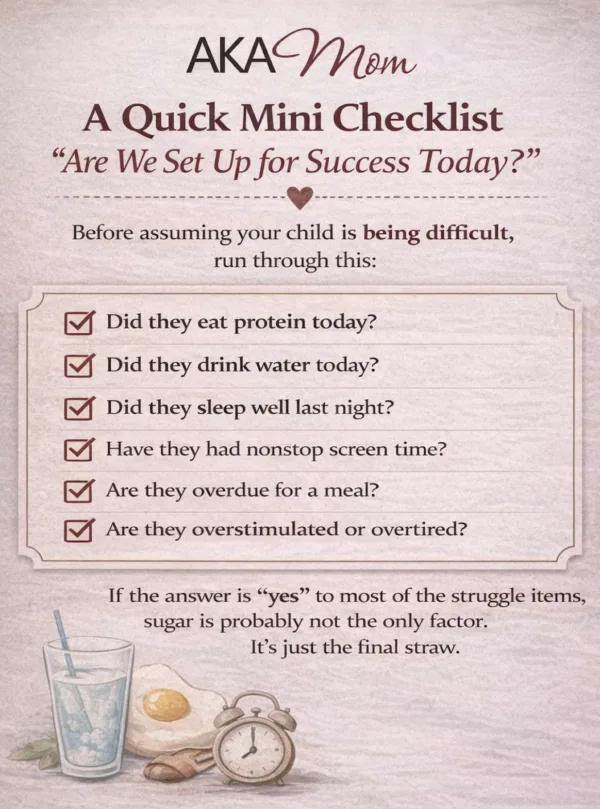
The Real Takeaway
Sugar isn’t the enemy. It’s just powerful.
And when you understand how your child’s body responds to it, you can work with it instead of feeling blindsided by it.
The goal is not to remove every treat. The goal is to stop walking into the snack-to-meltdown pipeline without a plan.
Because moms deserve better than crying in the snack aisle.
And our kids deserve snacks that don’t emotionally wreck them.
Now excuse us while we all go eat something with protein, since we are also one snack away from a meltdown.
