
There was a time when choosing skincare meant standing in the drugstore aisle, reading the back of a bottle, and hoping for the best.
Dry skin? Try this one.
Fine lines? Maybe that one.
Sensitive? Good luck.
This trial-and-error approach just feels … inefficient.
Now, beauty has entered its custom era.
Personalized beauty formulas are no longer reserved for celebrities with private dermatologists. Brands are using online assessments, AI-driven skin analysis tools, and in-depth quizzes to create products tailored specifically to your skin type, concerns, climate, and even lifestyle.
It sounds futuristic. It also sounds slightly intimidating.
But here’s the real question.
Does personalized beauty actually make a difference, or is it just a more expensive way to buy moisturizer?
Let’s unpack it.
What “Personalized” Actually Means
Personalized beauty formulas start with you, not a category.
Most brands ask you to complete a detailed questionnaire about your skin type, sensitivities, goals, environment, and habits. Some go further, analyzing uploaded photos or using at-home diagnostics.
Instead of buying a generic “anti-aging” or “hydrating” cream, you receive a blend adjusted to what your skin actually needs now.
For example:
• Your formula might dial back potent actives if you report sensitivity.
• It may emphasize barrier-supporting ingredients if you live in a dry climate.
• It may prioritize brightening or hydrating actives depending on your priorities.
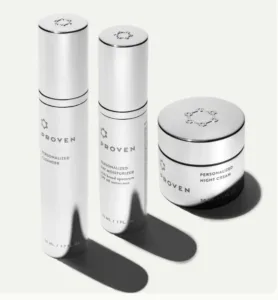
Brands like PROVEN Skincare offer a personalized system where a Skin Genome Quiz gathers data about dozens of skin factors to craft a regimen just for you.
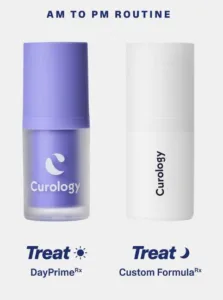
Other modern approaches, like Curology, combine photos with your history to deliver custom prescription-style formulas tailored to your skin goals.
In theory, personalized beauty reduces the trial-and-error cycle most of us know all too well.
And if you’ve ever spent money on three different serums that didn’t work, the appeal of something designed for you is obvious.
Why This Trend Is Growing So Fast
There are a few reasons personalized beauty formulas are exploding.
First, consumers are more educated. Women (and men) are reading ingredient labels, learning about actives, and asking smarter questions about what they put on their skin.
Second, technology has improved. AI-based skin assessments and algorithm-driven formulations make customization scalable and more precise.
Third, people are tired of waste. Filling a shelf with half-used products that didn’t deliver results no longer feels worth it.
Personalized formulas promise:
• Fewer products
• Fewer reactions
• More targeted results
It’s beauty with intention, not guesswork.
Does It Actually Work Better?
This is where nuance matters.
Personalized skincare does not mean magical skincare.
If you need prescription-strength treatment for acne, severe hyperpigmentation, or melasma, an algorithm won’t replace a dermatologist. Some brands guide you closer to that path, but they aren’t a substitute for medical care.
However, for everyday concerns like uneven texture, early fine lines, dryness, or dullness, customized formulations can minimize irritation and help avoid ingredient overload.
One issue many people run into is over-layering. With so many serums and creams available, it’s tempting to stack vitamin C in the morning, exfoliating acids at night, peptides whenever, and barrier creams just in case.
A single product tailored to your needs can simplify that chaos.
Instead of five bottles competing for attention, you end up with one or two that were created to work together.
Less confusion. More consistency.
The Psychology of Feeling Seen
There’s also something psychological happening.
When a product arrives with your name on it or clearly reflects your concerns, it feels intentional. It feels thoughtful.
For many women, that personalization increases adherence, you use it more consistently, and consistent use is what actually drives results.
Even if the formulation differences are subtle, the behavioral shift is real: you’re more invested in products that feel made for you.
The Caveats No One Talks About
Personalized does not automatically equal superior.
Not all personalization tools are created equal. Some use basic quizzes with limited variables. Others leverage more advanced data and even photo analysis.
You still need to:
• Understand your skin goals
• Avoid chasing every trending ingredient
• Give products time to work
• Wear sunscreen daily, always
And yes, personalized beauty often costs more.
But it’s worth considering if it replaces multiple ineffective purchases rather than adding to them.
Is It Worth It for Busy Moms?
If you’re juggling work, family, errands, and everything in between, simplicity matters.
A tailored moisturizer-serum hybrid that tackles hydration and early fine lines may be more practical than a six-step routine you never finish.
Personalized beauty works best when it reduces decision fatigue.
Because most of us do not have time to decode ingredient charts at 10:30 p.m.
We want something effective, streamlined, and low drama.
The Bigger Picture
The rise of personalized beauty reflects a larger shift in how women approach self-care.
It’s less about chasing trends and more about understanding your own biology.
Your skin is unique.
Your environment is unique.
Your stress levels, sleep patterns, and exposure to sun and pollution are unique.
Why wouldn’t your skincare reflect that?
Personalized beauty does not replace fundamentals like sunscreen, hydration, sleep, and healthy habits.
But it can make your routine feel more intelligent, not just assembled from what was on sale.
The Smarter Way to Approach It
If you’re curious about personalized formulas:
Start with one product, not an entire routine.
Look for transparency in ingredients and processes.
Make sure there is a clear return or adjustment policy.
Give it at least eight to twelve weeks before judging results.
And remember:
Customized skincare is a tool, not a miracle.
But in a world full of generic promises, something truly tailored just to you feels like a step in the right direction.
Because sometimes the best beauty advice is simple.
Know your skin. Support it consistently. And stop buying products just because someone said they were life-changing.
Your skin deserves better than trend panic.
