
There was a time when beauty meant buying a new serum and hoping for a miracle.
Now it means standing in the supplement aisle wondering if a pastel gummy can fix everything from dull skin to thinning hair.
Collagen powders. Biotin capsules. Adaptogens. Greens blends. Liquid chlorophyll. Things with names you cannot pronounce but apparently need.
The idea is simple. If your skin, hair, and nails reflect what is happening inside your body, maybe glowing from within is not just marketing language.
But here is the honest truth.
Not all supplements are equal. And not all of them make dermatologists excited.
Some are backed by meaningful formulation and research. Others are backed by aesthetic packaging.
Let’s talk about the ones that actually have support behind them and why absorption matters more than hype.
Collagen That Actually Gets Used
Collagen is still the headline act in the beauty supplement world, and unlike some trends, it is not entirely smoke and mirrors.
Collagen production naturally declines as we age. That is not dramatic. It is biology.
Hydrolyzed collagen peptides are broken down into smaller chains, which makes them easier for the body to absorb and use. That is the key difference between well-formulated collagen and trendy powders that simply look good on a counter.
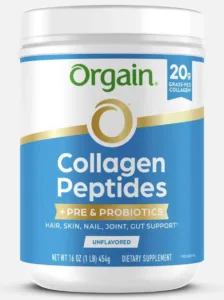
A solid example is Orgain Collagen Peptides + Prebiotics & Probiotics. It uses hydrolyzed collagen and pairs it with gut-supporting ingredients. That combination matters, because your digestive system plays a role in how well you actually absorb what you take.
Does collagen erase wrinkles? No.
Can it support elasticity and hydration over time when taken consistently? Research suggests it may.
Dermatologists do not yawn at that.
The Gut-Skin Conversation Is Getting Louder
The gut-skin axis is not just wellness buzz anymore. There is increasing research suggesting that inflammation and microbiome balance can influence skin clarity and barrier function.
That is where formulation becomes important.
Orgain’s blend includes prebiotics and probiotics alongside collagen, supporting digestion and potentially improving nutrient uptake. When your gut environment is balanced, your body is generally better at utilizing nutrients that support skin structure.
It is not glamorous advice.
But it is smarter than chasing glitter gummies.
Omega-3s and Fat-Soluble Nutrients
Healthy fats support the skin barrier and help regulate inflammation. Omega-3 supplements are frequently discussed in dermatology settings because calm skin often starts internally.
When choosing omega-3 or vitamin D supplements, look for oil-based or softgel forms, which tend to support better absorption than compressed tablets.
Absorption matters.
Your body cannot benefit from what it cannot properly use.
Vitamin D: The Quiet Overachiever
Vitamin D deficiency is more common than most people realize.
It plays a role in immune function, skin regulation, and even mood. If you are indoors frequently or live in a climate with limited sunlight, levels can dip.
This is one supplement dermatologists often suggest testing before supplementing. Guessing is not strategy.
An oil-based vitamin D formula generally supports better absorption than standard dry tablets.
Again, this is not flashy. But it works.
Hair Support Without the Hype
Biotin has been marketed as the solution for thin hair and brittle nails for years.
Here is the nuance.
If you are deficient, supplementation can help. If you are not, megadosing does not necessarily mean dramatic results.
This is where comprehensive formulas come in.
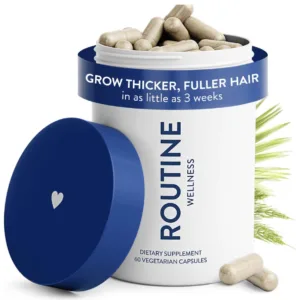
Routine Wellness Hair Growth Supplement is an example of a targeted blend that includes biotin along with complementary nutrients that support hair health overall. Instead of relying on a single vitamin, it combines supportive ingredients designed to work together.
That synergy matters more than chasing one hero nutrient.
Dermatologists are far more interested in balanced formulas than single-ingredient megadoses.
Liposomal and High-Absorption Supplements
You may have seen the word liposomal floating around.
Liposomal delivery systems encapsulate nutrients in tiny fat-like particles that can enhance absorption. While not every supplement needs to be liposomal, the concept reinforces an important point.
Form matters.
Hydrolyzed collagen is easier to absorb than non-hydrolyzed forms. Oil-based vitamin D is generally better absorbed than dry forms. Multi-ingredient formulas that include supportive cofactors can improve how nutrients are utilized.
It is not just what you take.
It is how your body absorbs it.
What Dermatologists Actually Care About
Before any supplement, most dermatologists will ask:
Are you eating enough protein?
Are you sleeping?
Are you managing stress?
Are you wearing sunscreen?
Supplements can support a foundation. They cannot replace one.
Beauty from the inside out is less about chasing the newest capsule and more about strengthening what is already there.
Protein supports natural collagen production.
Healthy fats support your barrier.
Hydration supports everything.
Sometimes the unsexy advice wins.
The Smarter Way to Supplement
If you are considering supplements for skin or hair:
• Talk to your healthcare provider.
• Test when possible.
• Choose brands that focus on formulation and absorption.
• Be patient. Most supplements require consistent use for 8 to 12 weeks.
• And do not stack twelve new products at once.
Your body is not a science experiment.
The supplement aisle thrives on urgency.
Real beauty tends to reward consistency.
And that is something dermatologists definitely do not yawn at.
