
Sleep training has never been a one-size-fits-all conversation, and in 2025, that truth feels more accepted than ever. Parents are no longer looking for the “right” way to teach sleep. They are looking for the way that fits their baby, their values, and the season of life they are in.
What has changed is not the goal, which is helping babies learn to sleep independently, but the way families approach getting there. Today’s sleep training landscape is broader, more flexible, and more informed than it was even a few years ago.
Why the Conversation Around Sleep Has Shifted
In the past, sleep training was often framed as an all-or-nothing decision. Parents either committed to strict routines or avoided the topic altogether. Now, more families are blending approaches, adjusting expectations, and focusing on responsiveness as much as consistency.
This shift reflects a larger parenting trend. Moms and dads are weighing emotional well-being alongside practical needs. They want solutions that support sleep without ignoring temperament, developmental stages, or family dynamics.
As a result, sleep training in 2025 looks less rigid and more personalized.
The Extinction or “Cry It Out” Approach
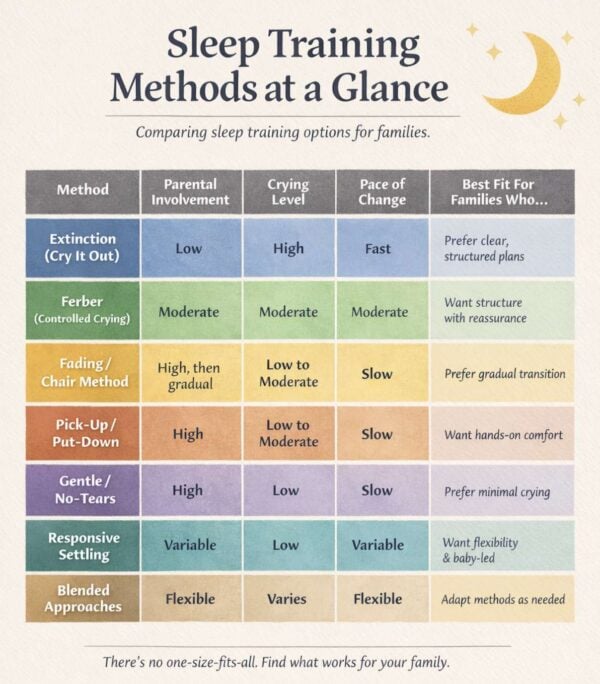
The extinction method, often referred to as cry it out, remains one of the most well-known sleep training techniques. With this approach, parents establish a bedtime routine and place the baby in the crib awake, allowing them to fall asleep without further intervention.
The philosophy behind this method centers on helping babies develop self-soothing skills by falling asleep independently. While the method has been used for decades, it continues to generate strong opinions, which is why many families carefully consider whether it aligns with their comfort level.
In 2025, parents who use this method often do so with clear boundaries, consistent routines, and an understanding of their baby’s developmental readiness.
The Ferber or Controlled Crying Method
The Ferber method offers a structured alternative to full extinction. Parents respond to crying at gradually increasing intervals, offering verbal reassurance or brief check-ins without picking the baby up.
This method is often viewed as a middle ground, maintaining consistency while still allowing for some parental presence. In practice, many families appreciate the balance it provides, especially when they want to encourage independent sleep but still feel connected during the process.
Like all sleep training approaches, success with this method depends on consistency and clear expectations.
Fading and the Chair Method
Fading methods take a slower, more gradual approach. Parents remain present in the room, often sitting near the crib, and slowly reduce their involvement over time. Each night, the level of support decreases as the baby becomes more comfortable falling asleep independently.
This approach emphasizes reassurance and patience. It can take longer than more structured methods, but many parents value the emotional closeness it allows during the transition.
In 2025, fading techniques are commonly adapted to fit different family situations, including shared rooms and varying sleep schedules.
Pick-Up Put-Down
The pick-up put-down method focuses on responsiveness. Parents place the baby down awake and respond to crying by picking them up briefly to soothe, then putting them back down once calm.
This method allows babies to experience comfort while still learning to fall asleep in their own space. It tends to involve more parental involvement and repetition, which some families find reassuring and others find tiring.
Parents who choose this approach often prioritize immediate responsiveness and a hands-on settling style.
Gentle and No-Tears Approaches
Gentle sleep training encompasses a range of techniques designed to minimize crying. These methods focus on predictable routines, soothing cues, and gradual changes rather than abrupt transitions.
Families using gentle approaches often rely on consistent bedtime rituals, environmental adjustments, and careful observation of sleep cues. Progress may feel slower, but many parents appreciate the reduced stress during the process.
In 2025, gentle sleep training continues to grow in popularity as parents seek approaches that feel emotionally aligned with their parenting style.
Responsive Settling and Baby-Led Methods
Responsive settling emphasizes tuning into a baby’s cues and responding promptly with reassurance while encouraging gradual independence. Parents may use verbal comfort, touch, or presence, adjusting support based on how the baby responds.
This method allows flexibility and acknowledges that sleep learning is not always linear. It also reflects a growing emphasis on attachment and emotional regulation in early development.
Responsive settling often evolves naturally as babies grow, making it appealing for families who prefer adaptable routines.
Blending Methods Is More Common Than Ever
One of the most notable trends in 2025 is that many families no longer follow a single method exclusively. Instead, they borrow elements from multiple approaches.
A parent might start with fading, use controlled check-ins during regressions, and lean into gentle techniques during growth spurts or illness. This flexibility reflects a broader understanding that babies change, and sleep needs change with them.
Sleep training has become less about rigid rules and more about informed choices.
What Matters Across All Methods
Regardless of the approach, several principles remain consistent. Babies benefit from predictable routines that signal bedtime. A calm sleep environment supports better rest. Putting babies down awake helps them practice falling asleep independently. And consistency, however it looks in your household, plays a key role.
Equally important is recognizing that progress is rarely linear. Sleep improves, regresses, and improves again. This is normal.
Sleep Training as an Ongoing Process
Sleep training in 2025 is no longer framed as a one-time event. Many parents view it as an ongoing process that adapts to developmental stages, family changes, and individual needs.
Rather than asking which method works best, parents are asking which approach works best right now.
That shift toward flexibility, understanding, and balance is what defines modern sleep training. And for many families, that mindset alone makes the journey feel more manageable.
